
What government and association planners should ask before renting an LED wall
Public-sector events have specific requirements — bilingual content, procurement documentation, tight timelines, and professional-grade execution. Here's the checklist.
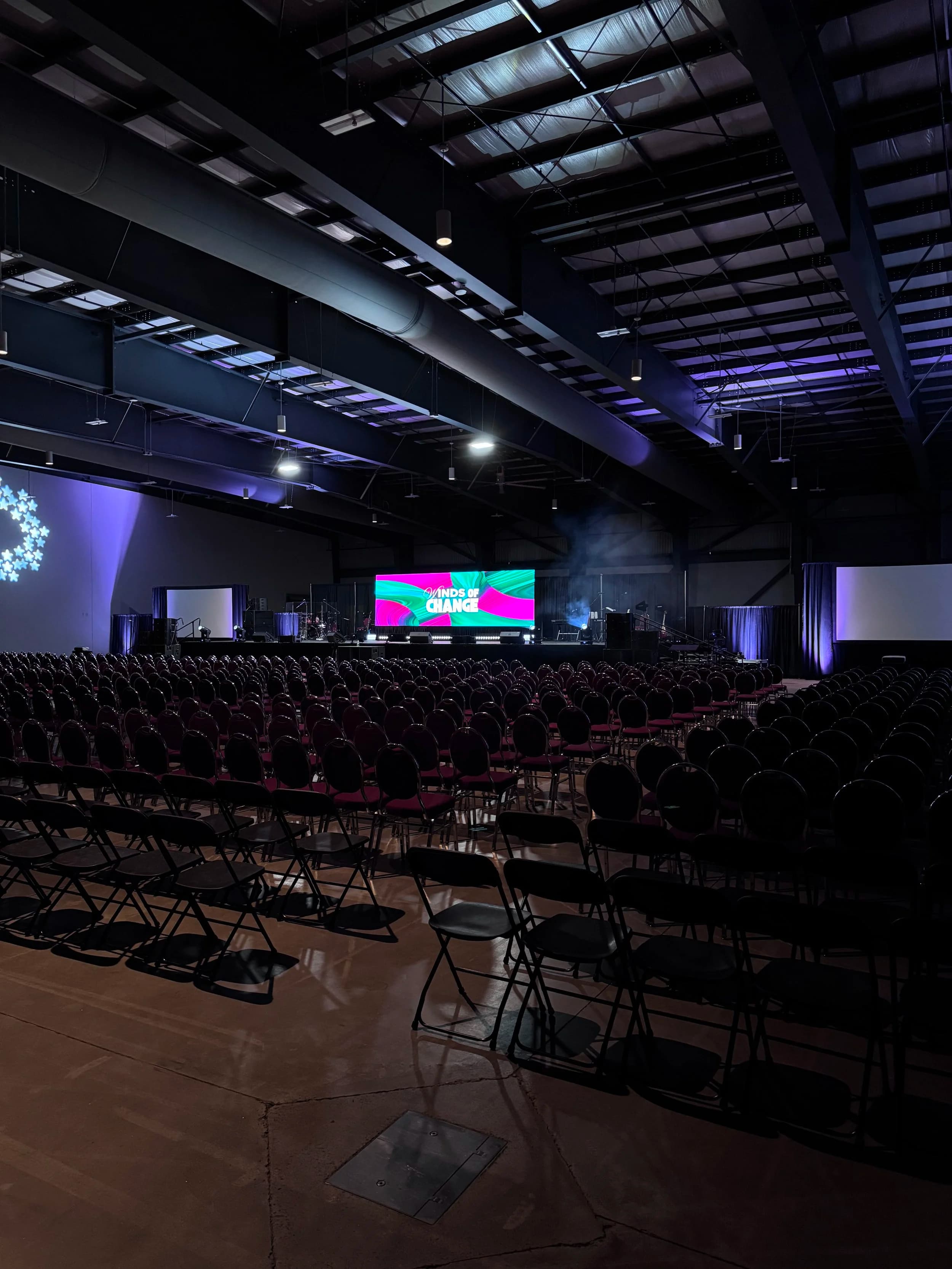
Questions about the equipment
What is the pixel pitch?
A 2.9mm pixel pitch (P2.9) is the right choice for conference and presentation content. It resolves fine text and data clearly at distances of 4–30 metres. Coarser pitches (P4 and above) are better for large-format outdoor use where the audience is far away. For a 300-person plenary where the back row is 25 metres from the screen, P2.9 is the minimum.
What is the brightness spec?
Indoor P2.9 panels should deliver 800–1,200 nits at calibrated conference settings. Higher nit ratings (2,000+) are available but unnecessary for indoor events and can create glare. The key is that brightness should be consistent across the panel — no hot spots, no dim corners.
What is the refresh rate?
For events where cameras will be filming the screen (broadcast, IMAG, or social media recording), the panel refresh rate should be 3,840 Hz or higher to avoid camera flicker. At lower refresh rates, video of the screen shows rolling bands or flicker.
Questions about the operator and service
Who is the on-site lead, and what is their direct number?
This question alone separates professional vendors from casual ones. You should have a named person, not "the team."
What is the contingency plan if a panel fails during the event?
The answer should be: spare panels on-site, a spare processor, and a secondary content source. Any vendor that doesn't carry spares is not set up for professional events.
How early is the setup window?
For government-level events, we recommend a minimum of 3 hours before doors open for setup, calibration, and a full content walkthrough. For multi-session events with ministerial speakers, 4+ hours is better.
Questions about content and bilingual requirements
Can you accept both French and English slide decks?
The answer should be yes, and the operator should be comfortable switching between bilingual content mid-session. We confirm language labelling with the client contact before every government event.
What file formats do you accept?
PowerPoint and Keynote are standard. PDF is also fine. We accept content handoffs up to 30 minutes before doors open for minor updates; anything structural should be confirmed 24 hours out.
Is IMAG available?
Image magnification — a live camera feed of the speaker displayed on the screen — is frequently requested for town halls and large conferences. Confirm whether the camera operator and switcher are included, or available as an add-on.
Questions about procurement and documentation
Can you provide a formal written quote for our records?
Yes — always. Government events routinely require detailed quotes for financial approval. We itemize every line: screen, operator, delivery, setup, teardown, and any add-ons. Quotes can be provided in both official languages on request.
Are you registered as a supplier?
For federal events under the sole-source threshold, a quote and a standard vendor form is usually sufficient. For larger contract values routed through CanadaBuys, ask your vendor whether they are registered in the system. We are.
What is your cancellation and postponement policy?
Government events sometimes move or cancel on short notice. Confirm the cancellation window and any deposit terms before signing. We build flexibility into government contracts given the nature of public-sector scheduling.
The one thing most planners forget to ask
Who owns the relationship — the planner or the venue?
Some Ottawa venues have preferred or exclusive AV relationships for their main halls. If you are booking AV through the venue, that is one arrangement. If you are bringing in an independent supplier (as is common for breakout rooms, gala dinners, and side events), confirm that in writing with the venue before you book your AV. Discovering a conflict on load-in day is the kind of problem that ends careers.